
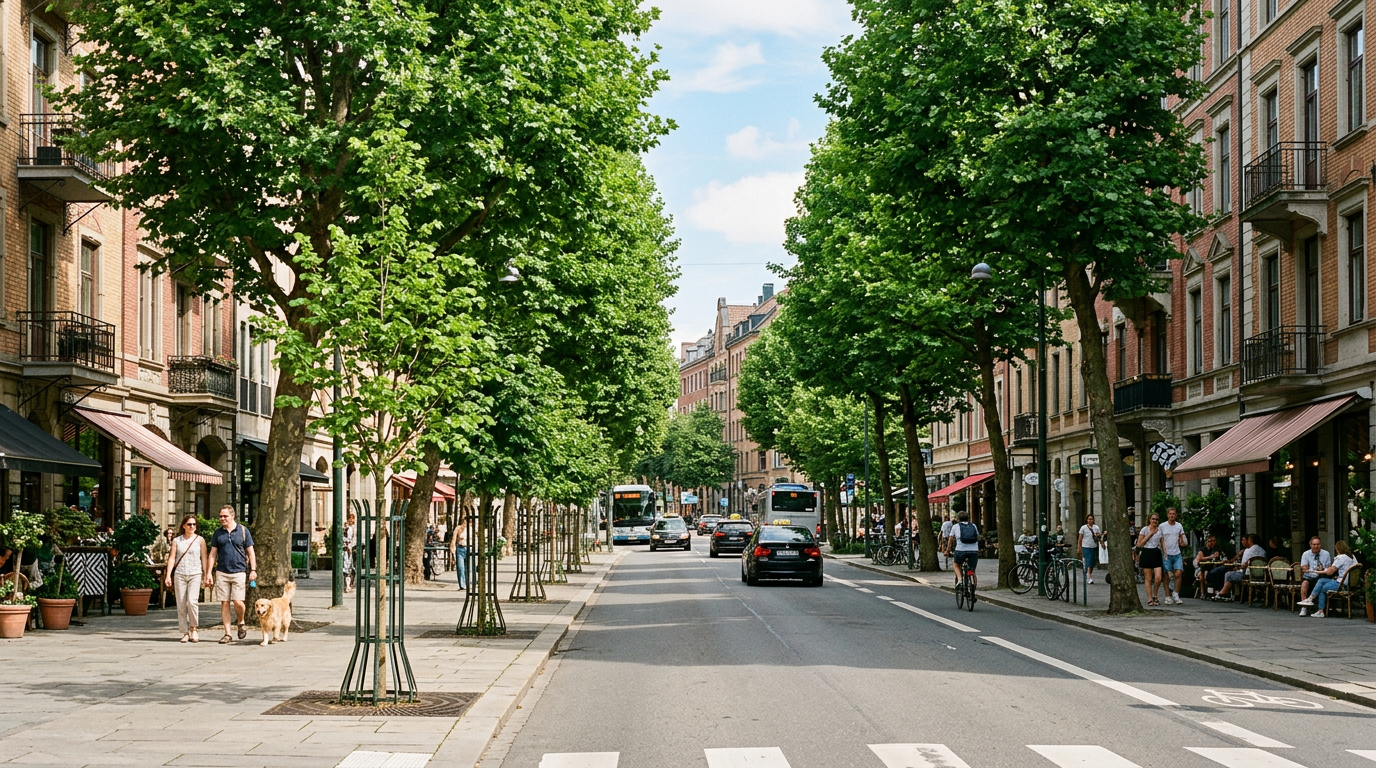
Tree-planting campaigns attract attention, but long-term outcomes depend on maintenance. Watering schedules, mulch renewal, pruning cycles, and health checks determine whether young trees survive.
City teams increasingly track survival rates rather than only planting totals. This shift helps measure real canopy growth instead of short-term activity.
Species diversity is a major planning factor. Planting a broad mix reduces vulnerability to pests and disease outbreaks that can damage single-species streets quickly.
Soil conditions also matter more than many people realize. Trees need adequate root volume and uncompacted soil to access water and remain stable during storms.
Heat mapping has made canopy equity visible. Neighborhoods with lower tree cover often experience higher summer temperatures and related health stress.
In response, some cities prioritize planting in high-heat districts and near schools, transit stops, and senior housing to maximize everyday benefits.
Monitoring technology is improving. Digital inventories track age, condition, species, and maintenance history so crews can prioritize care efficiently.
Community participation strengthens outcomes. Residents who water nearby saplings, report damage early, and protect planting zones increase survival during vulnerable early years.
Budget planning must include maintenance from the start. Planting without follow-up care creates avoidable losses and weakens public trust in greening programs.
Even tree losses provide useful data when recorded properly. Understanding why plantings fail helps improve species selection and site design over time.
The central lesson is practical: planting is the beginning, not the finish. Cities that track and maintain trees carefully gain cooler streets, healthier neighborhoods, and more resilient public spaces.