
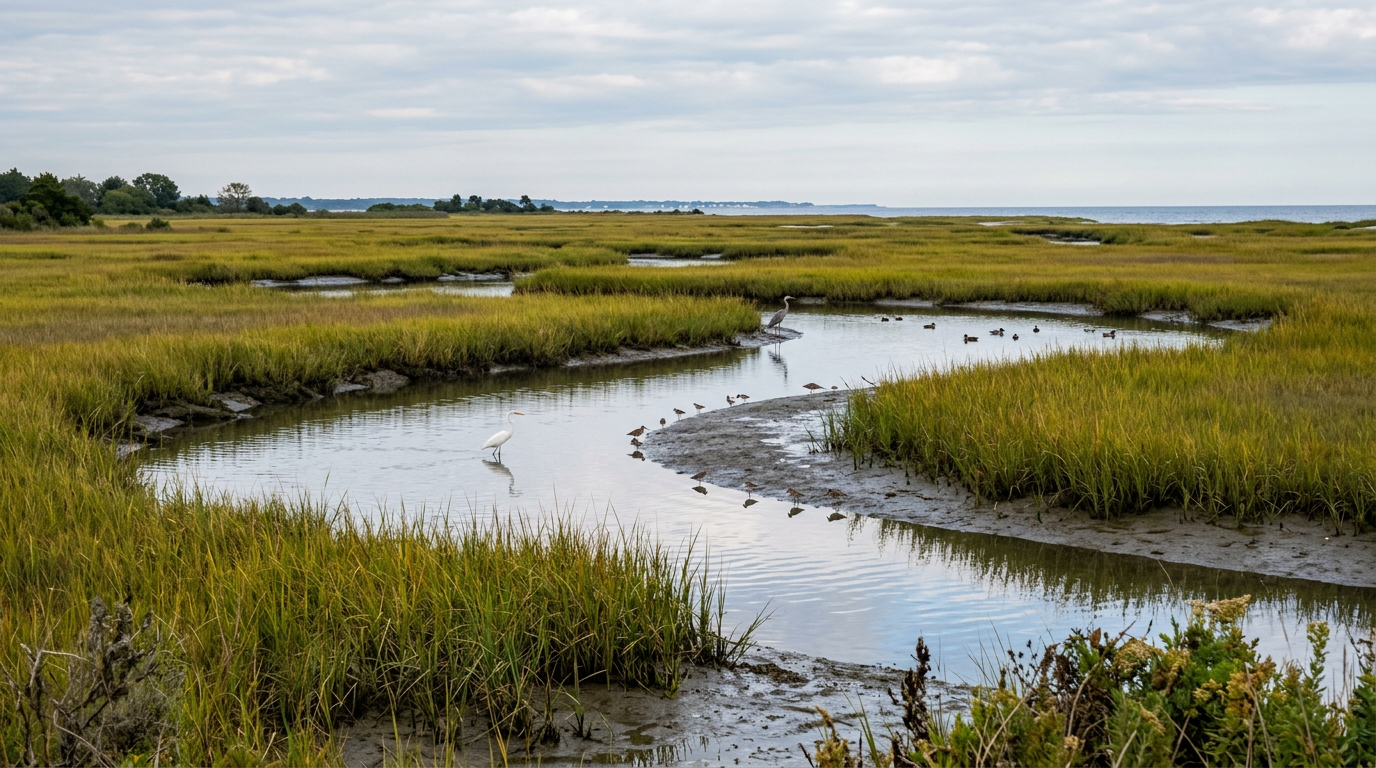
When storms push water inland, friction across coastal landscapes matters. Wetlands reduce wave energy, slow surge movement, and absorb runoff before it reaches streets and buildings.
Salt marshes and mangroves act as natural buffers. Their vegetation and shallow channels dissipate force in ways hard infrastructure alone cannot always replicate.
Unlike seawalls, wetlands can adapt gradually if space allows. They accumulate sediment and shift over time, which can support longer-term coastal resilience.
Hard barriers still play an important role in many locations. The strongest strategies usually combine engineered protection with wetland conservation and restoration.
Development pressure remains a major challenge. Filling marshes for short-term land use can increase long-term costs through flood damage, drainage upgrades, and ecosystem loss.
Wetlands also support fisheries and water quality. They provide habitat for juvenile species and filter pollutants moving from land to sea.
Restoration projects require realistic timelines. Regrading channels, replanting native species, and reestablishing tidal flow often take years before full benefits appear.
Monitoring is essential for adaptive management. Teams track vegetation health, sediment movement, and storm performance to refine restoration methods over time.
Community involvement improves project durability. Local stewardship programs can support maintenance, reduce dumping, and build understanding of why wetland space should be protected.
Policy tools such as setback rules and managed retreat planning can help wetlands migrate landward as sea levels rise, preserving protective function.
Wetland restoration is not a quick fix, but it is a practical climate adaptation strategy. Done well, it protects coasts while sustaining biodiversity and local economies.