
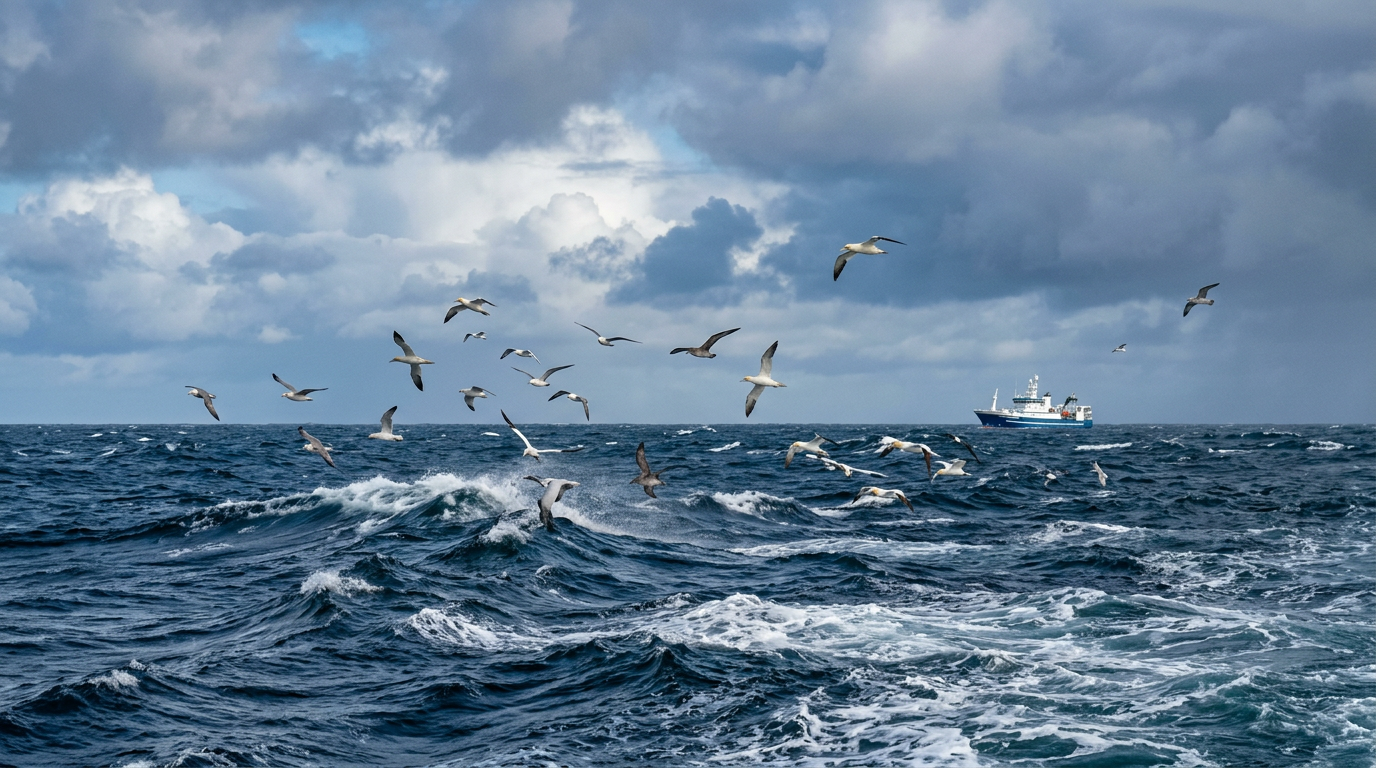
When researchers attach tiny loggers to seabirds, they are not only tracking birds. They are also sampling where birds find food, which often aligns with fronts and upwellings in the ocean.
Seabirds travel efficiently because energy is costly at sea. Their routes can highlight productive marine zones that matter for fisheries, conservation planning, and climate monitoring.
Modern tags record position, dive depth, and sometimes temperature. Combined with satellite data, these records create richer maps of how physical ocean conditions influence animal behavior.
Over years, tracks can show how preferred foraging zones shift. Those changes may reflect altered currents, warming water, prey redistribution, or a combination of several moving factors.
Timing is important. Some species adjust routes seasonally, while others depend on narrow feeding windows tied to breeding cycles and chick growth demands.
Data quality depends on careful fieldwork. Tag size, attachment method, and retrieval rates all affect how representative the sample is and how confidently results can be interpreted.
The method has blind spots: tagged individuals are not a random draw, and findings from one colony may not generalize to another species with different hunting strategies.
Researchers therefore combine bird tracking with plankton surveys, acoustic fish counts, and oceanographic models. Cross-checking improves confidence and reduces the risk of overinterpreting one signal.
For policymakers, these studies offer practical value. They can inform seasonal protection zones, shipping guidance near sensitive feeding areas, and better design of marine reserve boundaries.
For the public, the message is simple: seabirds are indicators of ocean health. Their movement patterns translate complex marine dynamics into observable evidence that ecosystems are changing.
In that sense, birds become messy but informative sensors, connecting biology and ocean physics in ways that help researchers understand long-term shifts more clearly.