
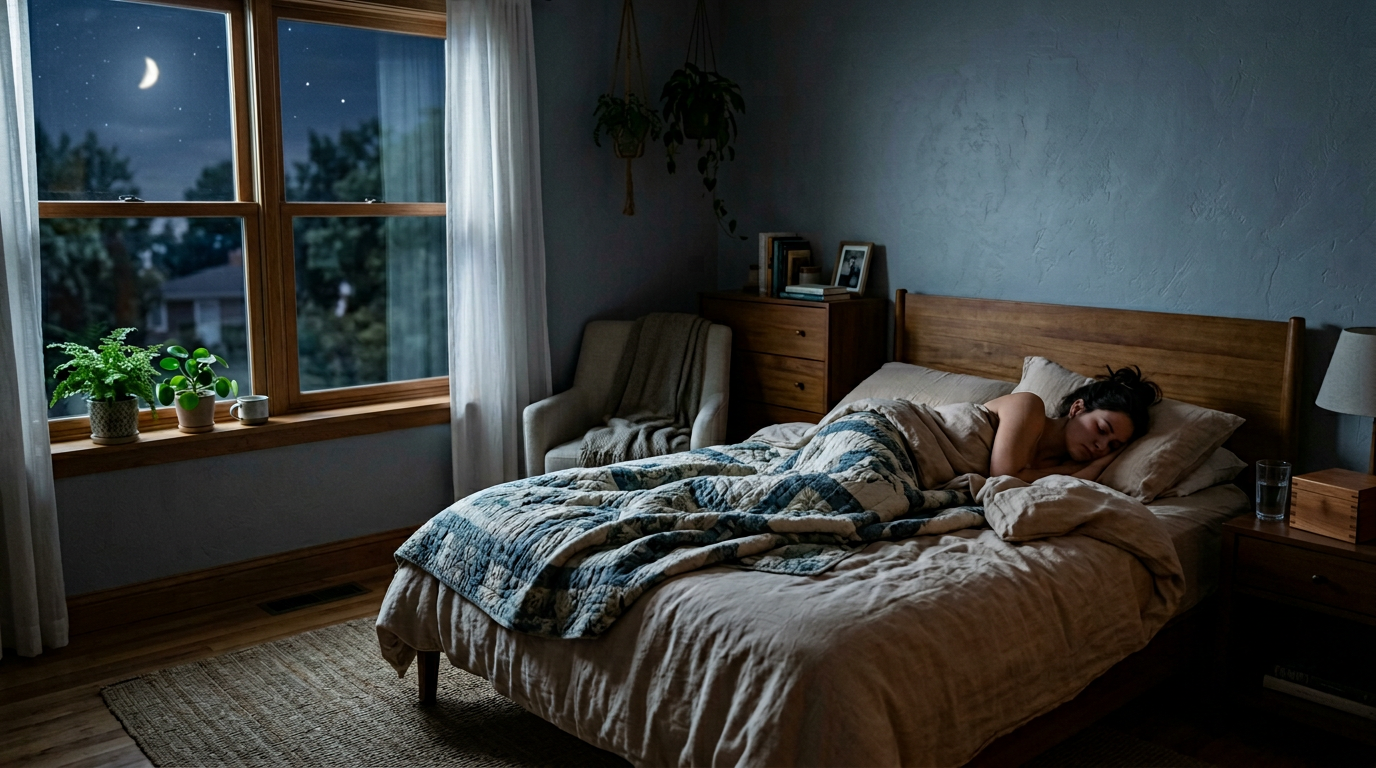
People have long claimed brighter nights mean lighter sleep. Modern studies sometimes find small differences around the full moon, but effect sizes are modest and findings are mixed.
One complication is light: a clear sky near a full moon means more illumination through windows, especially when curtains are thin. Separating lunar timing from ordinary light exposure is difficult.
Another issue is behavior. Bedtimes often shift on weekends, travel days, or social evenings, and those factors can influence sleep far more than lunar phase in most datasets.
Researchers use different methods, including sleep diaries, wearable devices, and laboratory recordings. Each method captures useful signals, but each also introduces different limits and sources of noise.
Population studies can detect tiny correlations with large samples. However, a statistically significant result is not always a practically meaningful result for day-to-day sleep quality.
Research in chronobiology notes that melatonin is sensitive to indoor lighting, screens, and schedule irregularity. Those factors are controllable and often dominate real-life outcomes.
When studies are repeated in different regions and seasons, effect sizes can change. That suggests local context, such as latitude, weather, and living conditions, may matter as much as lunar phase.
For individuals who feel they sleep differently around certain nights, tracking helps. A simple month-long log of bedtime, wake time, caffeine intake, and mood gives clearer evidence than memory alone.
If patterns do appear, practical adjustments are straightforward: blackout curtains, reduced evening screen brightness, and a stable wind-down routine can improve sleep regardless of moon cycle.
The honest takeaway is pleasantly boring. Lunar claims are interesting and worth studying, but they do not replace core sleep fundamentals that work consistently for most people.
In short, the moon may play a small role under some conditions, yet reliable sleep is still built on routine, light management, and habits that reduce stimulation before bed.