
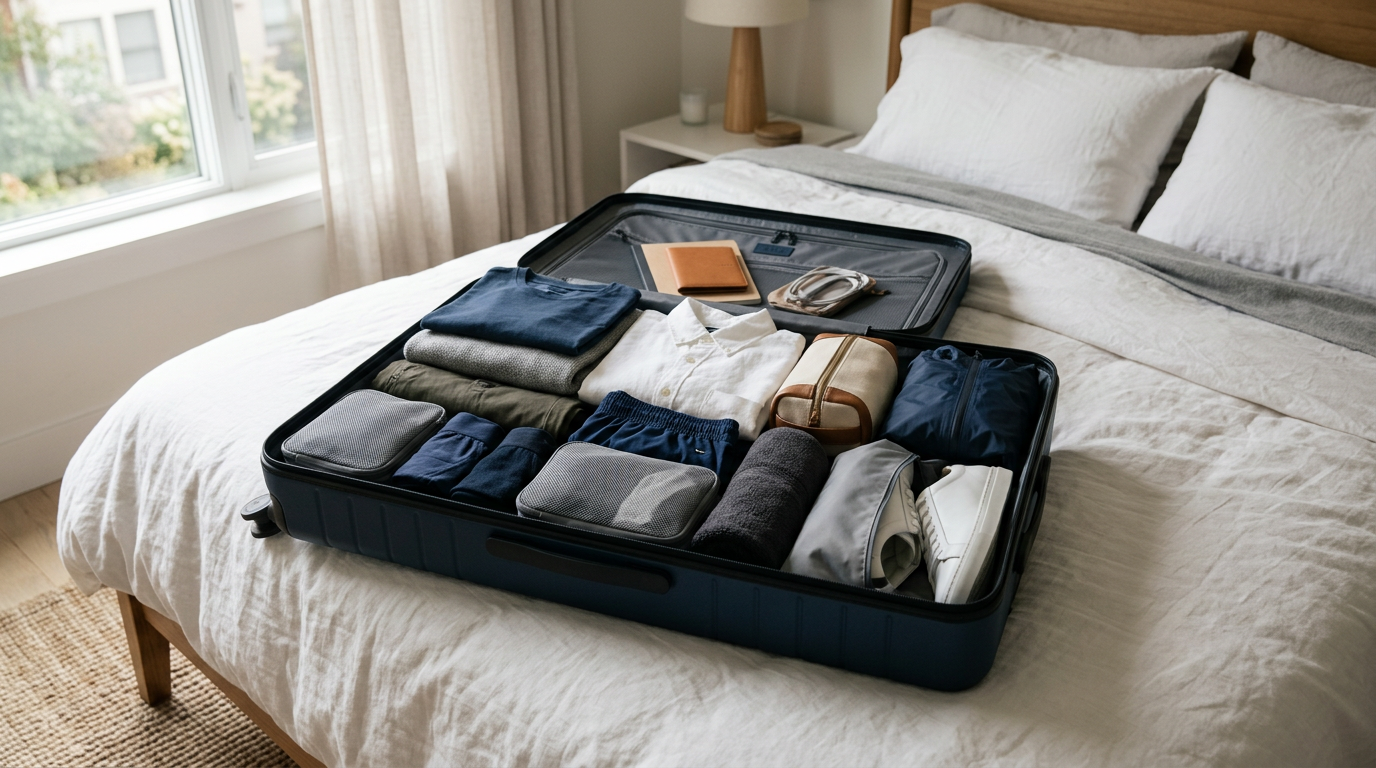
Frequent travelers often stop packing for imaginary emergencies. The extra shoes, duplicate gadgets, and rarely used clothing layers usually add weight without adding real value.
Light packing starts with a clear trip profile: weather range, activity level, and laundry access. Decisions become easier when every item has a specific purpose.
A capsule approach works well for short and medium trips. Choose versatile pieces in compatible colors so most items can be combined without planning separate outfits.
Shoes are usually the biggest volume challenge. Many experienced travelers limit themselves to one primary pair plus one compact backup for weather or evening use.
Laundry is a strategy, not a failure. A small detergent packet and quick sink wash can replace carrying a full week of clothing.
Toiletries should match destination reality. Most essentials are available locally, so carrying full-size products rarely makes sense unless you have specific medical needs.
Digital organization reduces physical clutter. Keep travel documents in one offline folder and use a small pouch for chargers to avoid repacking confusion.
Before departure, do a final removal pass. Taking out three non-essential items usually improves mobility more than buying a lighter suitcase.
Packing light also saves time in transit. Faster airport movement, easier train boarding, and less waiting at baggage belts make travel days more predictable.
The hidden benefit is mental. Fewer items mean fewer decisions each morning and less worry about lost belongings.
If uncertainty remains, pack one flexible layer and stop there. Most travel problems are solved by adaptation, not by carrying half your wardrobe.