
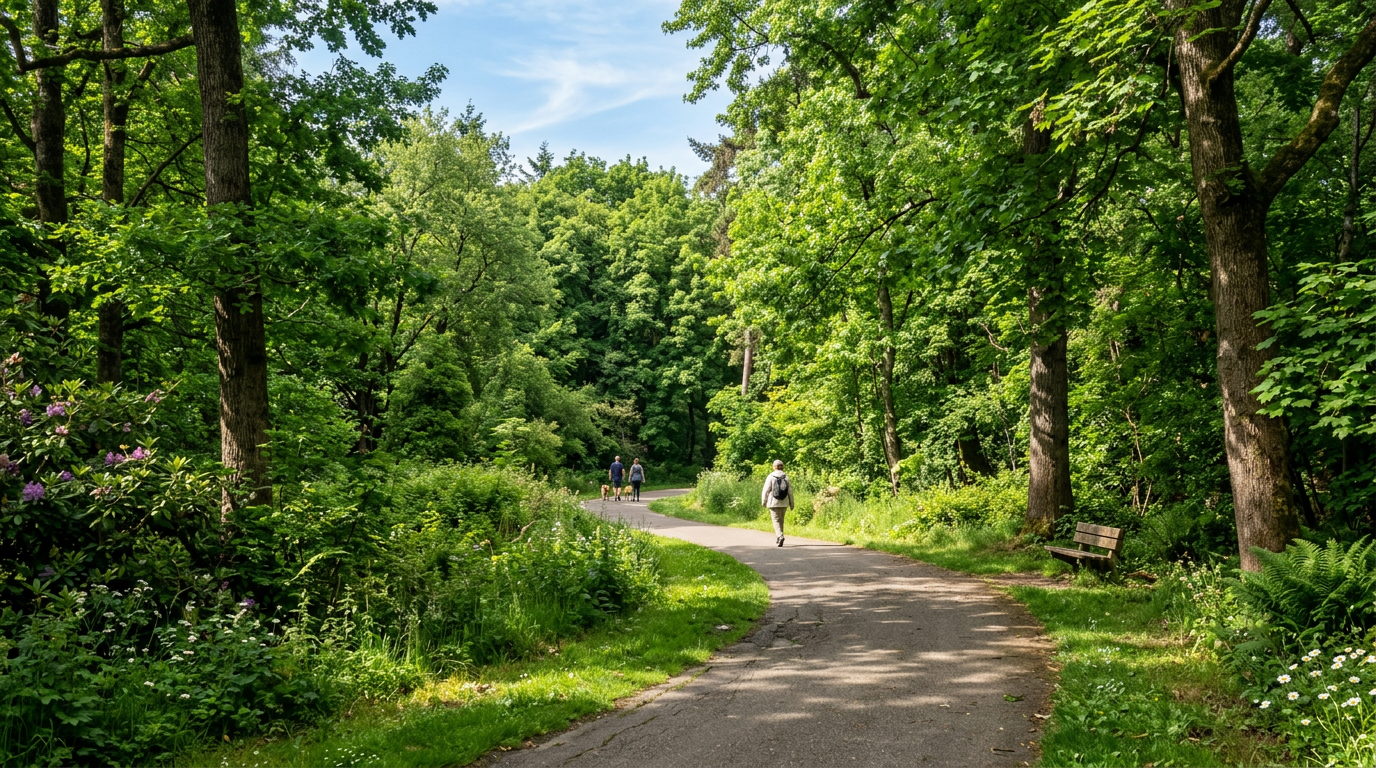
Some urban parks are open lawns, while others create a strong sense of separation from nearby streets. The most restorative spaces often use topography, trees, and winding paths to soften city noise.
Water features can play a major role in that effect. Even a small pond or stream adds natural sound and visual calm that contrasts with traffic and concrete surroundings.
Tree density matters as much as park size. A compact, shaded park can feel more peaceful than a larger open field with little canopy cover.
Entrance choice influences first impressions. Side entrances away from major roads often provide a gentler transition and make the park feel quieter from the first minute.
Look for parks with layered spaces: open areas, wooded sections, and hidden seating. Variety allows both short breaks and longer walks without repetition.
Timing changes the experience. Early morning and late afternoon typically offer softer light, fewer crowds, and better conditions for relaxed walking or reading.
If you enjoy photography, seek vantage points that frame skyline glimpses through foliage. These partial views capture the contrast between nature and city life effectively.
Many parks also host local culture quietly, through weekend markets, outdoor performances, or community gardens. These activities can reveal neighborhood character beyond tourist routes.
Comfort planning helps you stay longer. Bring water, a light layer, and a simple sit pad if benches are limited or damp after rain.
Maps are useful, but leave room for exploration. The best urban park moments often come from choosing an unplanned path and seeing where it leads.
In dense cities, these spaces function as daily infrastructure for wellbeing. A park that feels removed from the high street can make even a short visit feel like a true reset.