
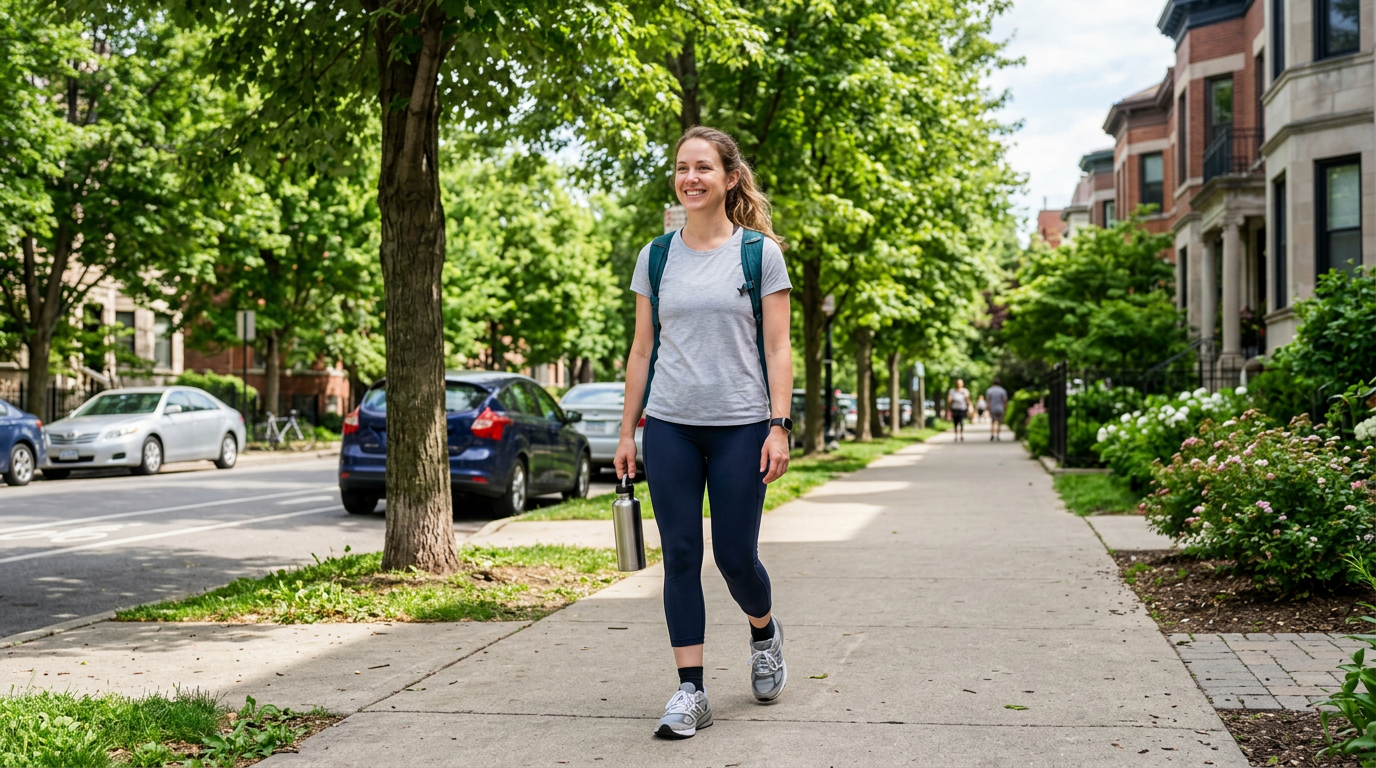
Not everyone has access to long trails or free time for extended exercise. Short walks still provide measurable benefits for mood, circulation, and mental reset.
A ten-minute walk after meals can support digestion and reduce afternoon sluggishness. For many people, this is easier to sustain than intensive routines.
Consistency matters more than distance. Three short walks across a day can be more realistic and just as useful as one longer session that rarely happens.
Urban environments work well when routes are simple. A familiar block loop removes planning friction and makes it easier to start even on busy days.
Walking can also improve concentration. Brief movement breaks between tasks often reduce cognitive fatigue and help restore attention for the next work block.
Comfort planning helps adherence. Supportive shoes, weather-appropriate layers, and a predictable route reduce excuses when motivation is low.
Pair walks with something enjoyable if helpful, such as music, a podcast, or a call with a friend. The habit becomes easier when it feels rewarding.
For people concerned about safety or weather, indoor options are valid. Stairwells, transit halls, and shopping centers can provide reliable movement space.
Tracking progress can be simple. A daily check mark for a short walk is often enough to build momentum without creating pressure around step counts.
Short walks are not a cure-all, but they are a dependable foundation. Small movement habits protect wellbeing during weeks when bigger plans are unrealistic.
The key message is practical: movement does not require perfect conditions. If you can walk briefly and regularly, it still counts and still helps.